
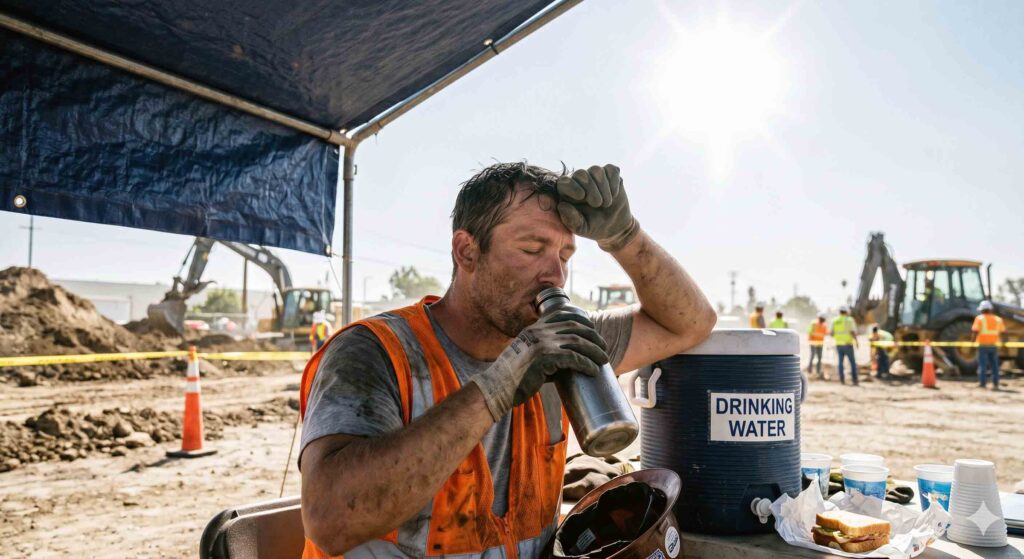
As we hit mid-May 2026, the American utility industry is bracing for more than just storm season. With Heat Safety Week (May 18–22) just days away, OSHA has officially ramped up its 2026 National Emphasis Program. For the American lineman, the stakes are higher than ever: new federal mandates now treat heat illness prevention with the same legal weight as fall protection or energized line protocols.
The 2026 Reality: The 80°F Threshold Rule
In the last 24 hours, safety directors across the Sun Belt have begun implementing the latest OSHA compliance phase. In 2026, any task performed where the heat index reaches 80°F for more than 15 minutes per hour now triggers a mandatory “Heat Injury Prevention Plan.” For a lineman in the bucket or climbing a pole, this isn’t just a suggestion—it’s a recorded safety requirement.
Technical Skill: Mastering Biometric Hydration Management
-
Wearable Integration: Many crews are now utilizing “Active-Heat” wearables that monitor heart rate and core temperature. Learning to interpret these digital alerts allows a lineman to call a “safety-halt” before heat exhaustion turns into heat stroke.
-
Acclimatization Scaling: 2026 training emphasizes the “20% Rule”—new or returning workers should only handle 20% of their normal workload on day one in high heat, scaling up daily.
Safety Highlight: PPE Fit and Thermal Stress
Yesterday’s NIOSH science bulletin highlighted a critical link between PPE fit and heat stress.
-
The PPE Fit Rule: Improperly fitting FR (Flame-Resistant) clothing can trap excessive heat against the skin. 2026 standards mandate that utility contractors provide moisture-wicking, lightweight FR gear that is specifically fitted to the worker’s body type to ensure airflow.
-
Hydration Stations: Safety protocols now require a dedicated “Shade and Water Lead” for every transmission crew, ensuring that rest breaks are non-negotiable when the index spikes.
Industry News: The 2026 Energy Resilience Grant
Yesterday, the Department of Energy (DOE) announced $11.3 million in new funding for the PACT Initiative. This program is designed to train the next generation of utility workers in “Climate-Resilient” skills. For career-minded linemen, this means new opportunities for certifications in grid hardening and geothermal energy infrastructure—roles that offer long-term job security in a shifting climate.
Conclusion: Protecting the Protector
Being an American lineman in 2026 is about managing the environment as much as the electricity. By mastering the new heat safety standards and leveraging technology, we ensure that our crews remain the strongest, most resilient force in the world. Stay hydrated, watch your brother’s back, and keep the power flowing safely.